Bitcoin and freedom: what we promised, where we showed up, where we didn't.
Twelve years of daily Bitcoin news. Hong Kong, Caracas, Athens, Buenos Aires, San Salvador. A look at what the protest-rail thesis actually delivered — and what it quietly outgrew.
The Bitcoin white paper was posted on October 31, 2008. The financial crisis was six weeks past Lehman. The bailouts were running. Satoshi embedded a headline from The Times in the genesis block — "Chancellor on brink of second bailout for banks" — and the entire thing read, from day one, as a protest. Not a protest in the streets. A protest in code.
That framing is what brought a lot of us in. It is the framing this site, this network of shows, has been broadcasting against and around for more than a decade. Mad Bitcoins started in 2013. World Crypto Network grew from there. The Bitcoin Group ran weekly. This Week in Bitcoin ran with it. The combined episode count crossed eight hundred long ago, and is closer to 2,878 across the four shows now. Most of those episodes had nothing to do with freedom. Most were prices, hash rate, exchange listings, drama. But a thread runs through the corpus — every time a currency collapsed, every time a government froze a donation rail, every time protesters got cornered — and that thread is what this essay is about.
The promise: a censorship-resistant rail for dissent.
The cypherpunks got there first. Tim May's Crypto Anarchist Manifesto in 1988. Eric Hughes's Cypherpunk's Manifesto in 1993 — the one with the line about how cypherpunks write code. David Chaum had been working on DigiCash since the mid-eighties. Hal Finney had built RPOW. The intellectual scaffolding was already in place when Satoshi finally produced a system that didn't need a trusted issuer.
The first time the protest-rail thesis was tested in public was December 2010. Wikileaks released the U.S. diplomatic cables. Within days Visa, Mastercard, PayPal, and Bank of America cut off Wikileaks' donation channels. There was no court order. There was no due process. There was a phone call, and the rails went dark. Bitcoin was the only working alternative — clunky, illiquid, but functional.
Satoshi posted on the bitcointalk forum on December 5, 2010 — paraphrasing here, because the wording matters — that it would have been better to get this attention in some other context, that Wikileaks had kicked a hornet's nest, and that the swarm was now headed toward Bitcoin. A week later, on December 12, 2010, Satoshi posted in public for the last time. The protest-rail thesis and the founder's disappearance arrived in the same fortnight. That is not a coincidence anyone has ever satisfactorily explained.
Wikileaks has kicked the hornet's nest, and the swarm is headed towards us. — Satoshi, bitcointalk forum, December 2010 (paraphrased)
Where Bitcoin actually showed up.
Six years later, in February 2016, WCN flew to London and stood outside the Ecuadorian embassy when the UN's working group on arbitrary detention ruled in Julian Assange's favor. Three episodes from that day are in the archive — the speech itself, an interview with a supporter named Elsa, and a long-running argument with a supporter-critic. That moment didn't end the Wikileaks story, but it did connect the December 2010 founding-myth back to a living person on a balcony, and to a small Bitcoin-news crew with a camera. Earlier coverage — a 2014 Mad Bitcoins episode titled "WikiLeaks Loves Bitcoin" — had already established the through-line.
The Hong Kong protests in 2014 are the reason the Umbrella Revolution report exists. James Bang was on the ground. Mong Kok was assaulted on October 17. The corpus has roughly eight episodes from September 30 through December 12, 2014, plus a long master live video. The protesters did not, in any large numbers, use Bitcoin. But the show was there because the question — what does a censorship-resistant network look like when the streets fill up — was the same question Bitcoin was asking, in a different register.
Argentina has been a running thread since 2013. A Mad Bitcoins episode that summer was filmed in Cafayate. By 2014 the country was in another debt default. Venezuela took over from there: hyperinflation, currency controls, roughly nineteen episodes between 2014 and 2019, the Reuters piece titled, in essence, "Venezuelans turn to bitcoins to bypass socialist currency controls." Greek capital controls in the summer of 2015 produced another small cluster — TWIC S2E22 covered Grexit, Venezuela, and Zimbabwe in a single episode, which tells you something about how the topics had started to braid together.
India demonetized its high-value notes in November 2016. WCN covered it, in episode 151 of the YMB Podcast, alongside Venezuela and Zimbabwe, under the title "Three Simple Ways to Tank an Economy." The frame had become legible by then: governments will torch a currency for reasons that have nothing to do with you, and when they do, you want an exit.
El Salvador made Bitcoin legal tender on September 7, 2021. The Bitcoin Group covered it three days before. The day-after episode focused on what Western Union would lose if remittances moved onto Lightning. The week after, "Protests — Bitcoin Statues!" — because of course there were protests, the rollout was rough. A month later there was a long interview with Nicolas Burtey, the founder of Galoy, the company behind Bitcoin Beach. That arc — promise, rough rollout, protests, a builder still building — is roughly the arc of the whole twelve years compressed into six weeks.
The tipping experiments.
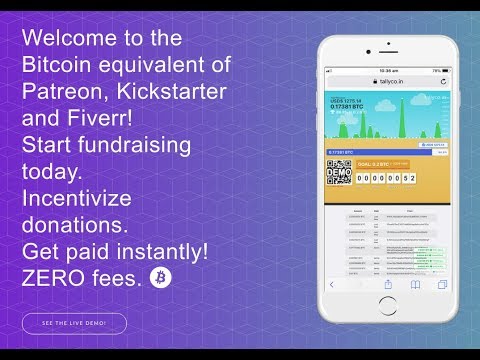
The freedom thesis also produced its own small tools. Chris Ellis launched ProTip in 2015 — a browser-extension tipping system for content creators. WCN ran the introduction in September of that year, and again when Ellis went on Max Keiser in December. ProTip didn't survive. Tallycoin came later. A 2018 episode walked through how to use it to support the show. The same platform later powered HonkHonkHodl during the 2022 Canadian Freedom Convoy. We did not cover that moment — see the honest box below.
What the thesis quietly became.
By the second half of the 2010s, the freedom framing was no longer the dominant story even on Bitcoin shows. The story became store of value. MicroStrategy bought in. Tesla bought in, briefly. Treasury allocations, ETF approvals, futures contracts. The center of gravity moved from "censorship-resistant donation rail for dissidents in failed states" to "hedge against U.S. monetary policy for institutional treasuries in functioning ones."
Those aren't the same use case. They aren't even adjacent. A Venezuelan accepting bitcoin for a freelance gig in 2017 because the bolívar has lost two zeros since Monday is doing something completely different from a Fortune 500 CFO buying spot ETF shares as a portfolio diversifier. Both are legitimate. Only one of them needed Bitcoin to exist.
Andreas's line.
In October 2014 — the same month as the Hong Kong protests — Andreas Antonopoulos testified before the Canadian Senate. The line everyone remembers is that Bitcoin is the internet of money. The line that has aged best, I think, is the one underneath it: that the early internet looked stupid because it carried email and cat pictures, and the same skepticism would attach to Bitcoin until enough of the application layer was built. Ten years later, the application layer for protest-rails is still mostly built by hand, one country at a time, usually after the protest has already started.
So, did Bitcoin deliver freedom?
Not the way the 2010 framing said it would. Not in the maximalist sense, where currency competition forces governments to behave. Not in the activist sense, where protesters route around Visa and PayPal at scale. Those are not the world we live in.
It did deliver something. It delivered a working exit for Venezuelan and Argentine and (briefly) Greek savers. It delivered a donation rail for Wikileaks when the legal system couldn't be bothered. It delivered a tipping layer that has kept this particular independent media operation funded for more than a decade. It delivered, in El Salvador, the first national-scale experiment in what a parallel monetary system actually looks like — with all the rough edges that come with it.
The freedom thesis was right about the problem and partially right about the tool. That's a more honest place to land than either the early evangelism or the later dismissal. Twelve years of broadcasting will do that to a thesis. You stop needing it to be everything, and you start being able to see what it actually is.
Sources & related episodes
The episodes below are the ones cited or alluded to above. They are part of a corpus that totals 594 Mad Bitcoins episodes, 1,568 World Crypto Network episodes, 482 Bitcoin Group episodes, and 234 This Week in Bitcoin episodes.








← Back to the Umbrella Revolution report | Internet & Freedom →