'PayPal wanted to be #bitcoin, but failed' — May 18, 2016
May 18, 2016. Bitcoin trading around $458, having just broken out of a long sideways range. PayPal stock at roughly $39, in the middle of a strong year for the payments processor. MadBitcoins posts ten words that reframe the relationship between the two:
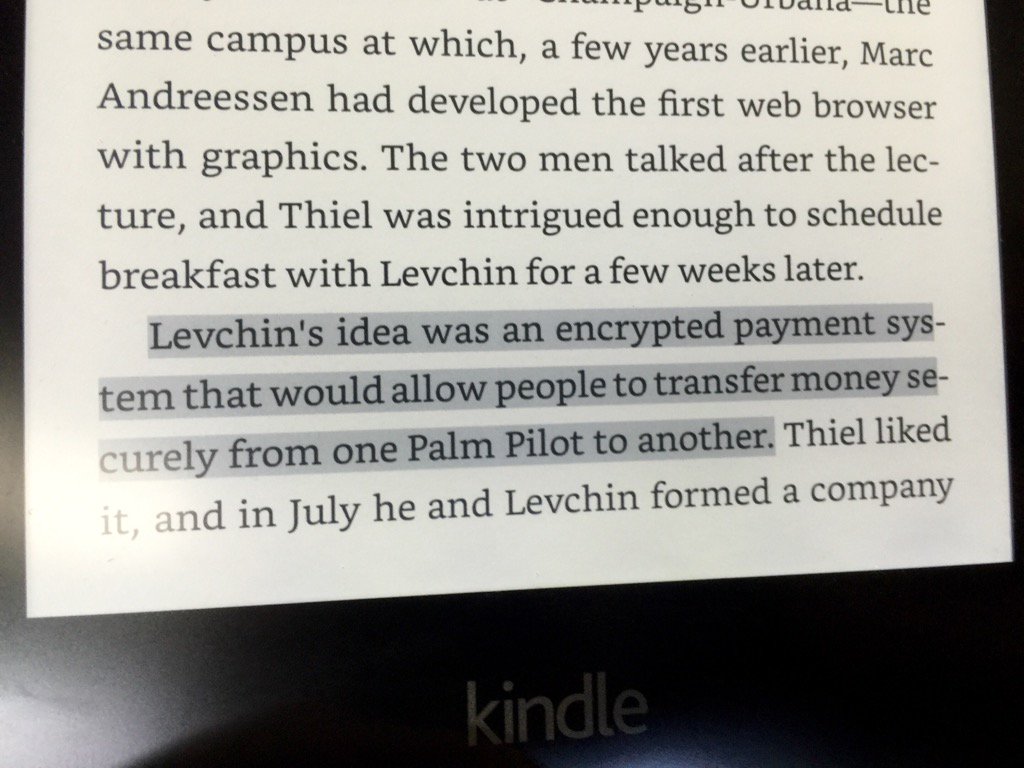
"Never forget" is a meme-tier opener — it borrows the gravitas of memorial language and applies it to a small-stakes argument about corporate history. The rest of the tweet does the work: PayPal once tried to be Bitcoin and failed. Bitcoin, by implication, is finishing PayPal's actual original mission.
The historical claim
The "PayPal wanted to be Bitcoin" claim is well-grounded. PayPal launched in 1999 as Confinity, founded by Peter Thiel, Max Levchin, and Luke Nosek. The original product was a way to beam money between Palm Pilots. The early business plan, as Thiel articulated in interviews and in his later book Zero to One, was to create a new global currency that would route around the dollar's monetary policy and operate beyond any single state's control. The vision was libertarian, internet-native, and explicitly anti-fiat.
That mission did not survive. The Palm Pilot money-beaming product failed. The pivot to email-based payments for eBay sellers succeeded. The 2002 eBay acquisition completed the transformation. By 2003, PayPal was a payments processor — a Visa wrapper with better internet UX — not a new currency. Thiel left. Levchin left. The original mission was, as Hunt's tweet says, abandoned.
Bitcoin's white paper appeared in October 2008, six years later. It was, in many ways, the project PayPal had walked away from: a peer-to-peer electronic cash system, designed to operate without trusted intermediaries, intended to function as an internet-native currency. The Bitcoin community has, since at least 2014, sometimes argued that Bitcoin is the unfinished assignment PayPal handed off to someone else.
Why the callback worked
The tweet's structure is the cultural-bridge format at its tightest. Ten words, no link, no image, no exegesis. The audience either knows the PayPal history or they don't. If they do, the tweet lands as confirmation of something they suspected. If they don't, the tweet plants a seed that they can look up.
The 38/39 engagement is moderate by 2016 MadBitcoins standards — not a viral hit, but a strong organic spread for a no-image, no-link, no-news-peg tweet. The reason it traveled is that the framing is permanent. Unlike a price tweet or a news tweet, "PayPal wanted to be bitcoin, but failed" is true at any later date. It got retweeted in 2016, and it kept getting retweeted in 2018, 2020, 2022 — every time the Bitcoin-vs-PayPal conversation resurfaced.
The tweet is also a clean example of @MadBitcoins doing journalism by reframing. There's no new information in it. Everyone in the Bitcoin community already knew PayPal's history. What Hunt added was the framing: PayPal as the project that walked away, Bitcoin as the project that picked it up. That framing has, over the years, become the dominant way Bitcoiners describe the relationship. Hunt didn't invent the idea, but his ten-word version is the most-quoted one.
This article is part of a deep-dive series on the @MadBitcoins Twitter archive — 91,295 tweets across 13 years. See all articles → or read the Bitcoin Breakout era overview.