The Ugly Old Goat
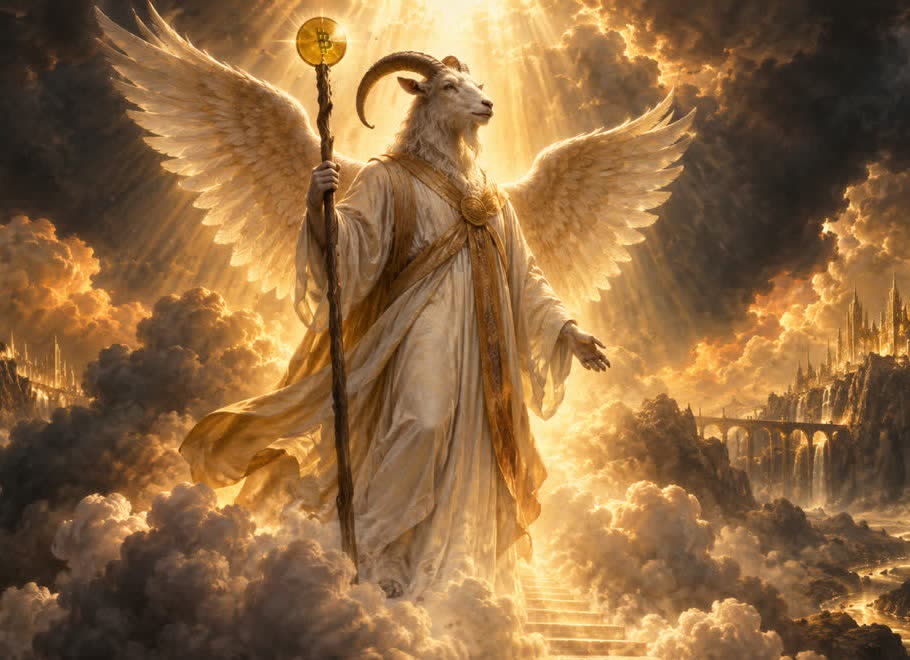
He took a Bitcoin conference out to sea, paid for the next one with ten bitcoin because ten bitcoin was where he started, and spent seven years telling people that "maximalist" was somebody else's word for them.
Conrad Braun died on 4 May 2026, aged 76. He had been posting until the middle of April. Word reached the Bitcoin community within days — the first public tributes appear on 8 May, and Tone Vays announced it outright on 9 May, saying he had confirmed it through the Goat's son. His daughter posted on his own account on 15 May, saying he had asked her long beforehand to tell his followers if it came to that. This piece is assembled from what he said on the record — the World Crypto Network archive, The Bitcoin Group transcripts, his own posts, the tributes his friends wrote that week, and one newspaper feature about his conference. Everything quoted here was said in public. It is written in September 2026, months after the fact, by people who found out late.
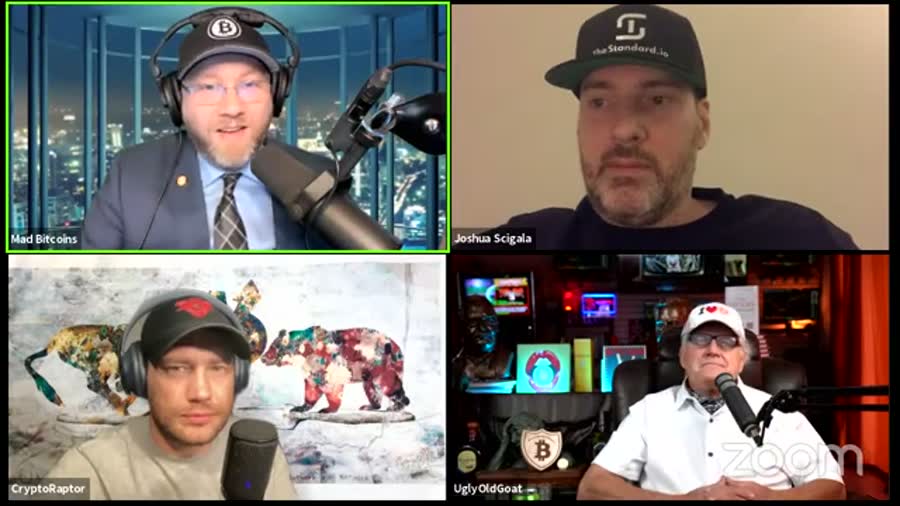
The first thing Thomas Hunt ever said to him on air was the wrong name. "Today's guest is Angry Old Goat." A beat, and then the correction, delivered with the timing of a man who had used it before: "Ugly Old Goat. I was so angry. I'm ugly. Very big difference." That was 6 March 2019. Over the next five years he would turn up on World Crypto Network in a goat mask, organise a conference on a cruise ship, invent an award made out of a wooden staff, sit three times on The Bitcoin Group panel, and go three-for-three on the weekly price call — which he would have enjoyed being reminded of, and which we will get to.
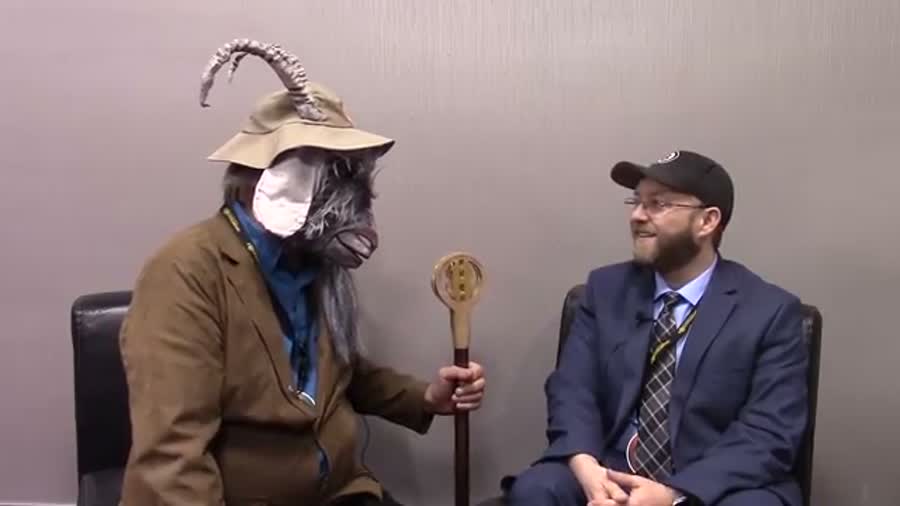
He was seventy when most of this started. He had already had one life in money — an Austrian -economics education that began, he said, when his father introduced him to Ludwig von Mises at a Kansas City hotel when he was fifteen, and a company in the 1980s called The Gold Standard that minted gold coins with economists' faces on them. Bitcoin was the second act, and he came to it the way he seemed to come to everything, which was all at once and slightly too hard. He bought his first coins on an overdraft. He told Hunt about it cheerfully, as a confession: "I bought some Bitcoin on Coinbase and I didn't have the money. So I paid for it on my… overdraft."
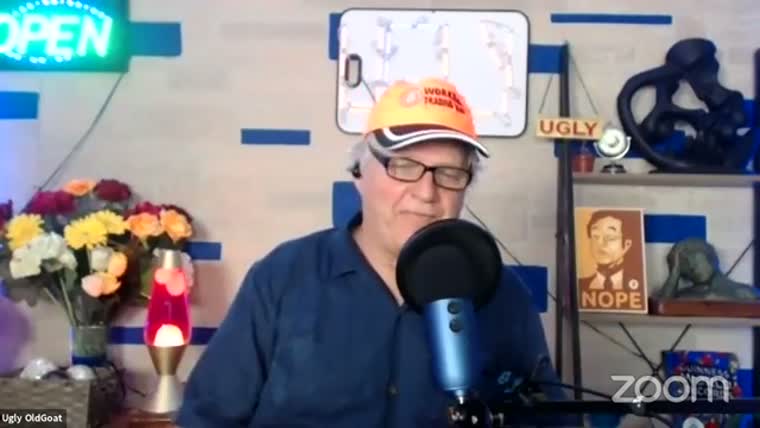
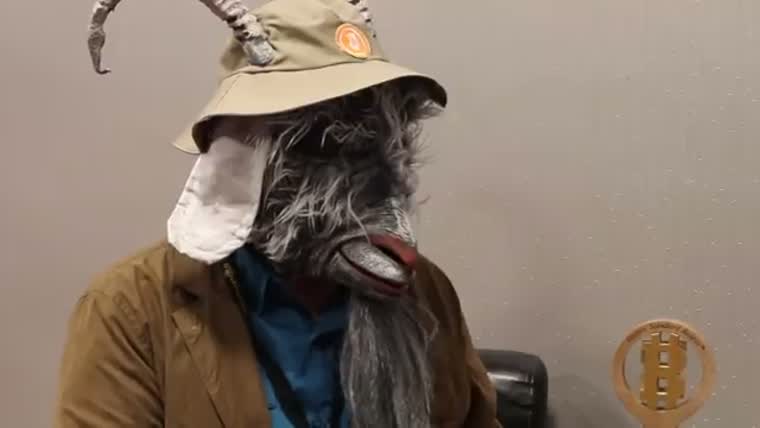
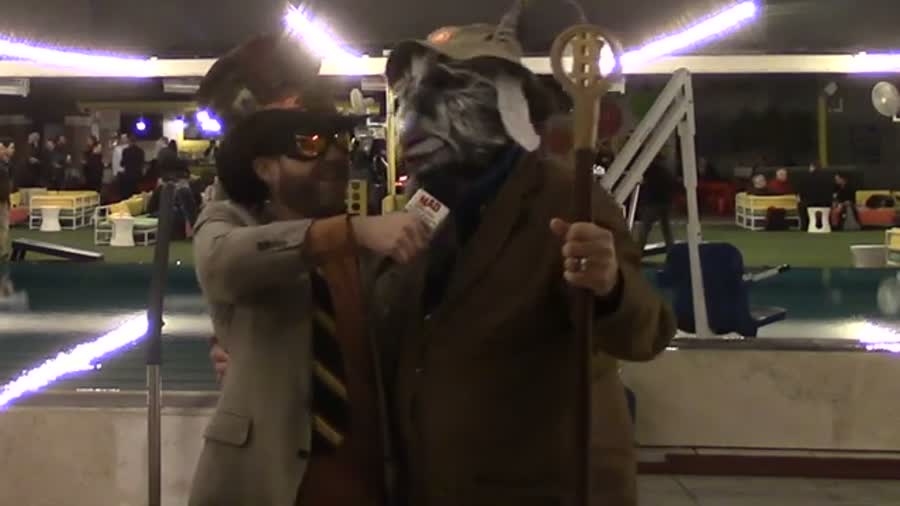
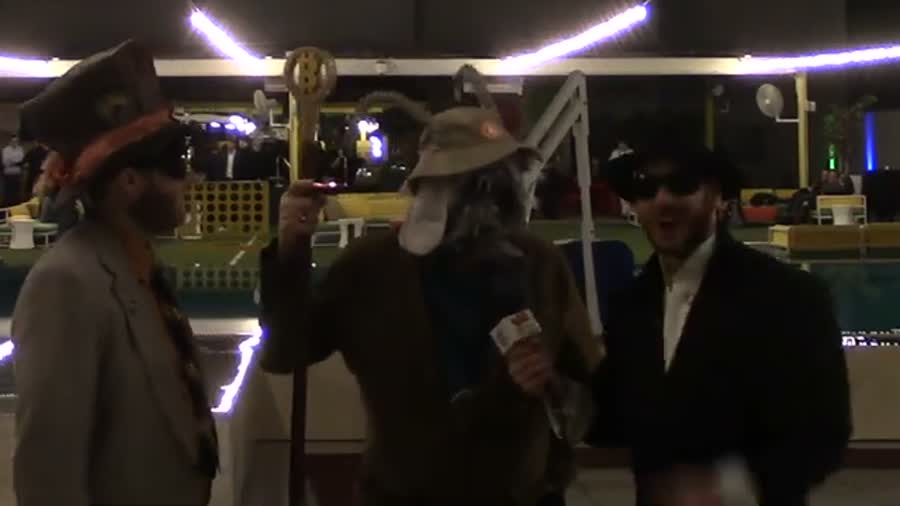
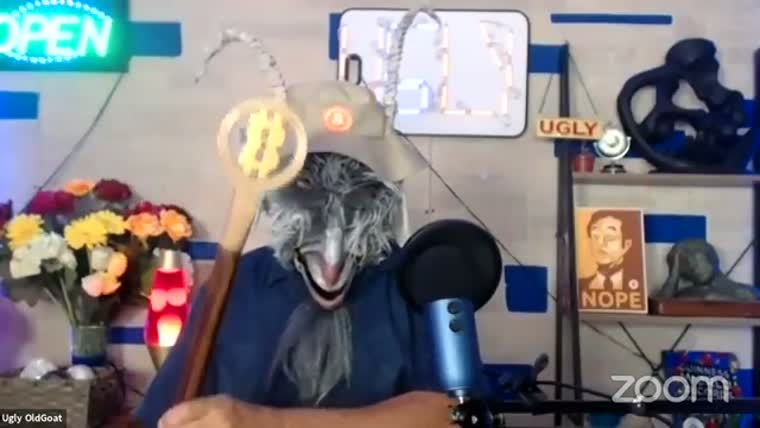
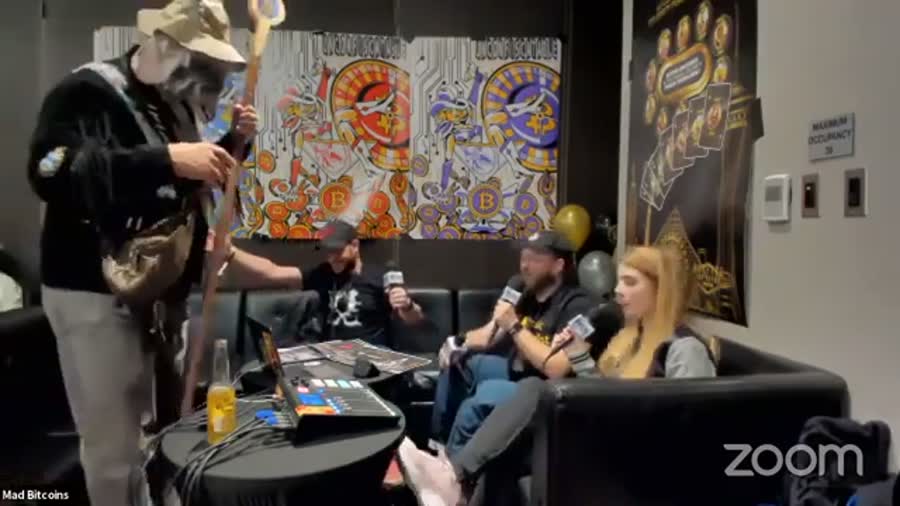
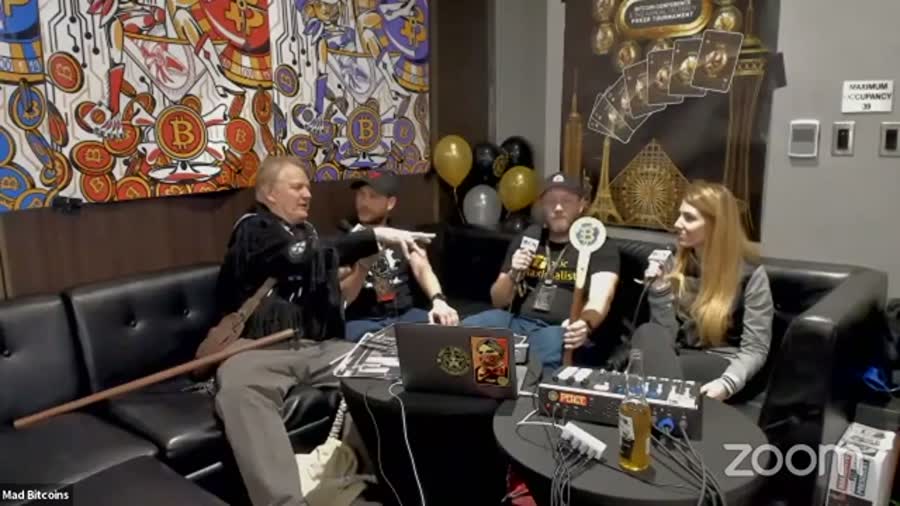
Under the mask he was, on the evidence of the tape, a cheerful man in a lava-lamp-lit room who would rather have been talking to you than at you. The mask came on and off across the years; the staff almost never left his hand.
01I'm on a boat
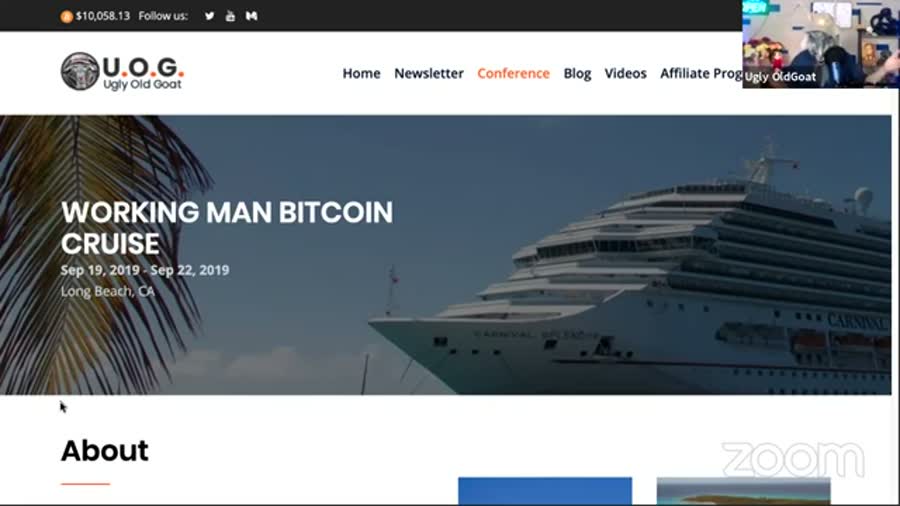
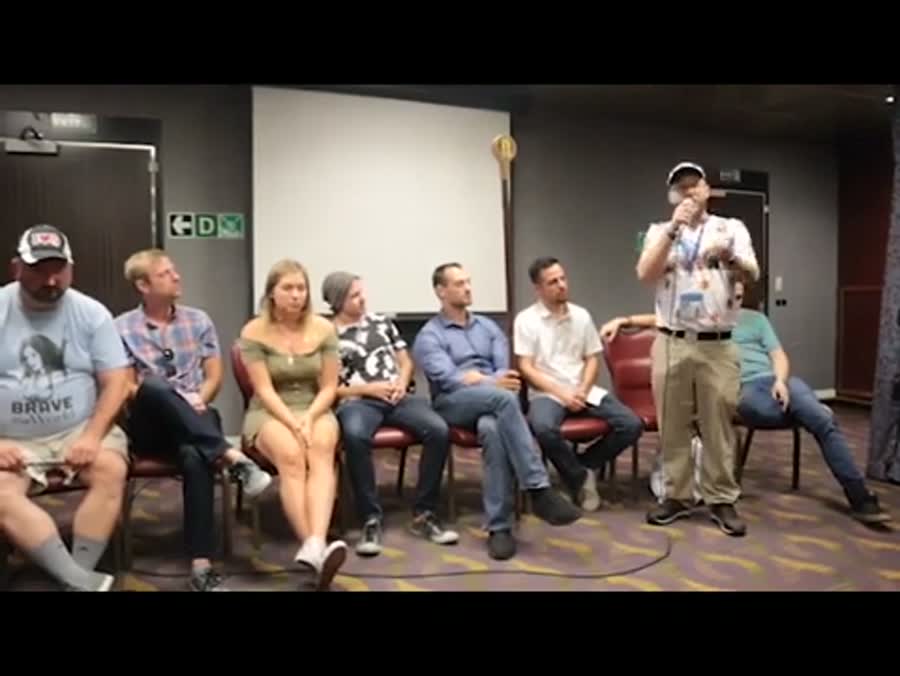
In September 2019 he put sixty people on a ship out of Long Beach, sailed them to Ensenada and back, and called it the Working Man's Bitcoin Cruise — so named, as Hunt explained on The Bitcoin Group that summer, because it left on a Thursday and came back on a Sunday. "So you don't have to take that many days off work. So it's for people with jobs. Real people, you know."
What came out of it, among nine hours of live broadcast and a dozen talks, was this: a Bitcoin parody of I'm on a Boat, filmed on the deck, starring the Goat and Mad Bitcoins. It is two minutes and forty-one seconds long, it got copyright-claimed on the audio, and it is the single most joyful artefact in the entire archive.
FJLM7zUqJucPosted at the time as "Featuring @UglyOldGoat1 @JuanSGalt @LadyAnarki @KatieAnanina @GabrielDVine @BTC1982 @BitcoinMotorist…" · archive tags: bitcoin, music video, mad bitcoins, ugly old goat, cruise, cruise ship, mexico, fun · episode page · YouTube
He was in it, and proud of it. Hours after it went up he posted the link with four words — "I AM ON A BOAT" — and nine months later Hunt was still rolling it on air, introducing it as the thing they shot together: "you can see right here in this video, both mad bitcoins and ugly old goat… on a cruise, singing."
The cruise lost him money. He did it again anyway.
02The conferences
This is the part of him the show archive undersells. He wasn't a guest who turned up to talk; he was a man who kept building rooms for other people to talk in, and kept paying for them himself.
Working Man's Bitcoin Cruise — September 2019
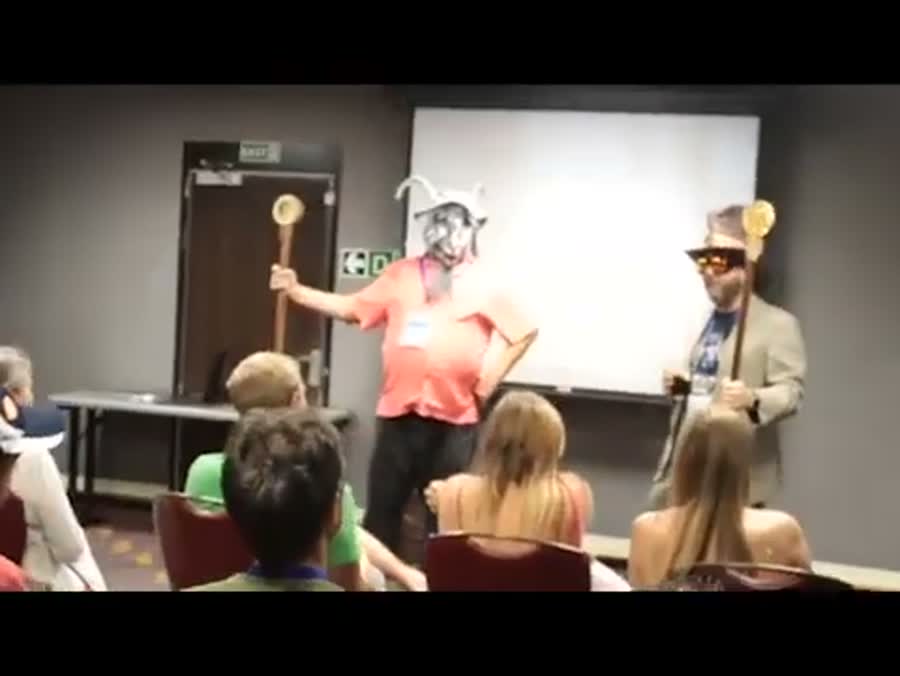
Announced in June, capped at sixty attendees, sold out by mid-September — "Two Spots Left. Cruise is a sellout! First come First serve." Long Beach to Ensenada and back, 19–22 September. WCN carried it live for nine hours and twenty minutes. The bill was the working Bitcoin internet of 2019:
- Mad Bitcoins (MC)
- Juan Galt
- Katie Ananina
- Lady Anarki
- Bitcoin Motorist
- Zezo Duarte
- Sawcruhteez
- Chef Bitcoin
- @BTC1982
- @daisy_komen_
- @neil_petta
- @KestutisRasimav
That list is his own, taken from the thank-you he posted afterwards — "Thank you to all the speakers of #Bitcoinworkingmancruise." Gabriel D. Vine prepared a talk for it, and Max Hillebrand was advertised on the June and August bills, though neither appears in the final thank-you.
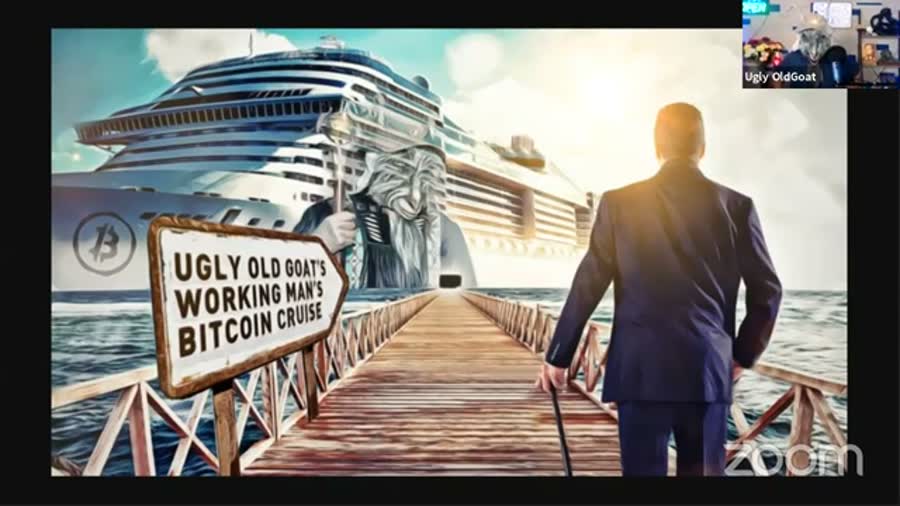
Bitcoin Motorist gave a talk called Bitcoin: Revolution or Evolution. Zezo Duarte spoke on how not to lose your hodl — a talk about losing money, which the Goat had talked him into giving. Thanking him for it afterwards, he explained why it mattered: he had told Zezo that he would really help a lot of people if he was willing to share his loss, because few people can do that. His own contribution was the welcome speech, which he posted afterwards under the title We Are The Bitcoin Nation:
The Bitcoin Standard Conference — August 2021
Two years later he did it properly on dry land: 12–15 August 2021, Ensenada, at bitcoinstandardconference.com. A seven-day VIP package priced at $13,995 — with ten per cent off for paying in Bitcoin, naturally — taking in a winery resort in the Valle de Guadalupe, a hotel on the ocean at Ensenada, and two days at a ranch. He announced the panels himself, one tweet at a time, like a man handing out flyers:
- Tone Vays
- Jimmy Song
- Knut Svanholm
- Giacomo Zucco
- Juan Galt
- @GrassFedBitcoin
- Guy Swann
- Joakim Book
- Bitcoin Motorist
- Gabe Higgins
- @mir_btc
- @dwaltchack
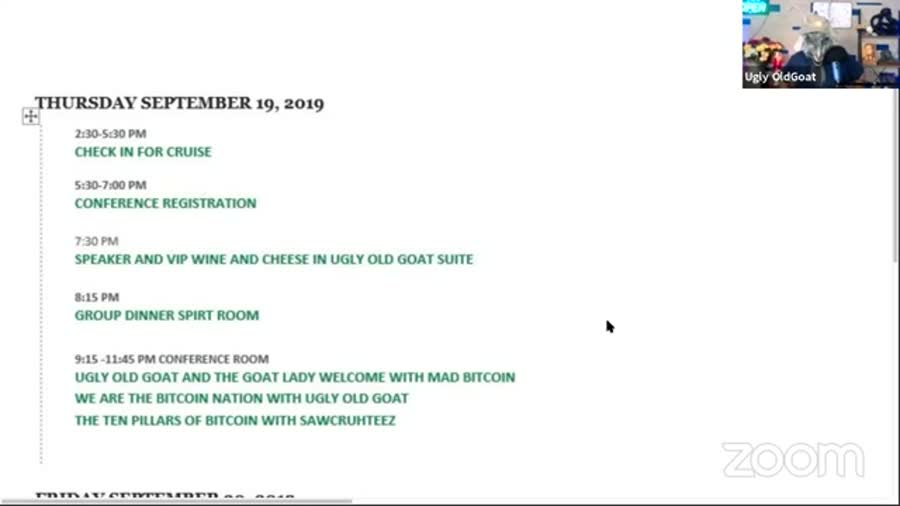
The programme included a panel titled Bitcoin Legal Tender: Should It Be Embraced Or Abolished?, a Thank God For Bitcoin panel, a session on the future of Bitcoin banking moderated by Juan Galt, and two paid workshops — Giacomo Zucco's Running a Bitcoin at $1,000 and Jimmy Song's Programming Bitcoin at $4,000. We can check most of this against the tape, because two days before it opened he screen-shared the running order on air:
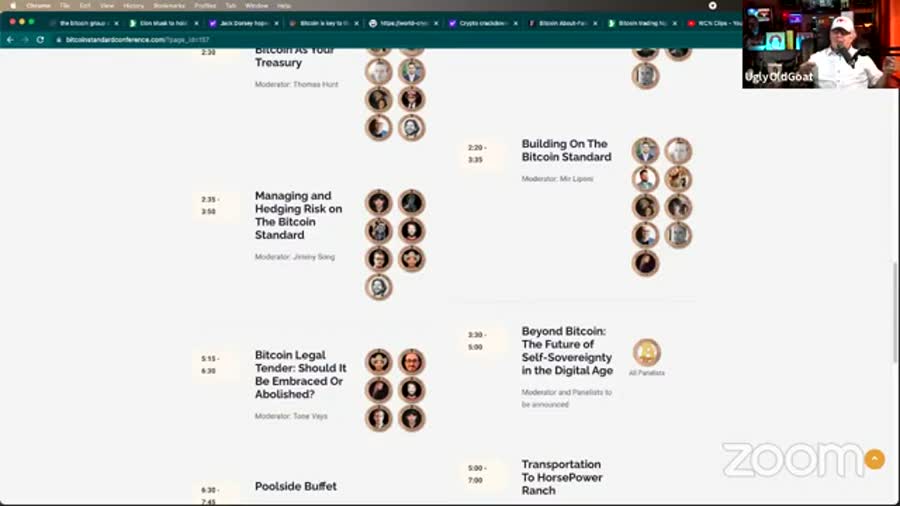
The conference fed straight back into the shows: when he took his first Bitcoin Group panel seat three weeks before it opened, Hunt introduced him as "Ugly old goat from the Bitcoin standard conference," and the following month Juan Galt was introduced the same way.
He paid for the whole thing with ten bitcoin. According to a San Diego Reader feature published that October, he chose the figure deliberately: ten coins was exactly what he had bought at the very beginning, on that overdraft. He had lost money on the cruise and he was anxious about ticket sales for this one, and he was still out there recording his own commercials in a poncho and a camouflage Bitcoin cap.
The Bitcoin Institute
The third thing was the one that never quite resolved. He trademarked the name The Bitcoin Institute and set aside a house near the beach at Ensenada for it, with the idea that people thinking of moving to Mexico could come and learn. Asked, reasonably, whether it was a school, he was magnificently unhelpful:
And then, pressed further, the sentence that probably explains all three ventures better than anything else in this piece:
03The word he changed, and the friend who took it
If he left one thing behind in the language, it is this one, and the archive lets us watch it happen almost in real time.
His objection to maximalist was political, not aesthetic. It was a label coined by opponents, and — as he put it on the cruise, reaching for the American revolution and the anti-Federalists, who he thought lost partly on the name — "you never want your opponents to label you." His replacement was Bitcoin standard bearer: a deliberate pun, since the award he later invented was a literal staff and its winner a literal bearer of it. He was using it publicly by December 2018, writing up Murad Mahmudov under the headline "A Bitcoin Standard Bearer" — a post that survives on his own account but not in the local archive.
Then, on 13 February 2019 — three weeks before the Goat had ever appeared on the show — Thomas Hunt interviewed the trader Tyler Jenks, and Jenks said this:
That is a man's idea arriving somewhere before he does. And the relationship ran both ways, which is the part that still lands. Five months later, on 24 July 2019, the Goat posted this:
The man who adopted the Goat's phrase on air in February is, by July, the man the Goat is publicly calling his teacher. A year later, presenting the Bitcoin Standard Bear Award at the Unconfiscatable conference in Las Vegas, the name he led with was Jenks's — that year's recipient, chosen so obviously that "we knew that's who was going to get it" before anyone needed to vote. Saifedean Ammous had taken it the year before. He had built a thing partly so that he could go on saying his friend's name at it.
04What he actually believed
He was not a technologist and never pretended to be. "I'm not a back end guy," he told the halving broadcast in July 2020. "I'm a trader." What he had instead was a hard, old-fashioned monetary argument that he was perfectly willing to take to rooms that didn't want to hear it.
The core of it: a monetary standard and a circulating currency are different things, and Bitcoin succeeding as the first may reduce its use as the second. From there he drew a conclusion his own audience mostly disliked — that Bitcoin would not, and should not, become the world reserve currency; that Hayek's competing currencies meant competition against government standards rather than against each other; and that banks would return to gold before they came to Bitcoin, with Bitcoin's job being to keep the gold standard honest.
He was scathing about the institutional-adoption story of 2021 — the whole thing, he said, "is a scam. Well maybe not a scam but at least very overrated" — and unimpressed by Elon Musk, who had "built an entire empire built on subsidies." When Jack Dorsey suggested Bitcoin might bring about world peace, the Goat's objection was theological rather than technical: libertarian individual sovereignty was "really a secular humanism," and "I believe in the sovereignty of God and not the sovereignty of men." That register — a genuinely religious man in a room full of engineers — is what made him sound unlike anyone else on the panel.
And on trading, the advice never changed in five years:
05Three for three
Every Bitcoin Group episode ends by asking each panellist whether Bitcoin will be higher or lower in a week, then asking a Magic 8-Ball the same question. He was asked three times. He got it right three times.
| Episode | Date | His call | BTC then | +7 days | Actual | |
|---|---|---|---|---|---|---|
| TBG #268 | 2021-07-23 | higher | $34,282.56 | $41,474.72 | higher +20.98% | ✓ |
| TBG #346 | 2023-02-17 | lower | $24,638.27 | $23,168.68 | lower −5.96% | ✓ |
| TBG #425 | 2024-10-05 | higher | $62,821.76 | $62,854.48 | higher +0.05% | ✓ |
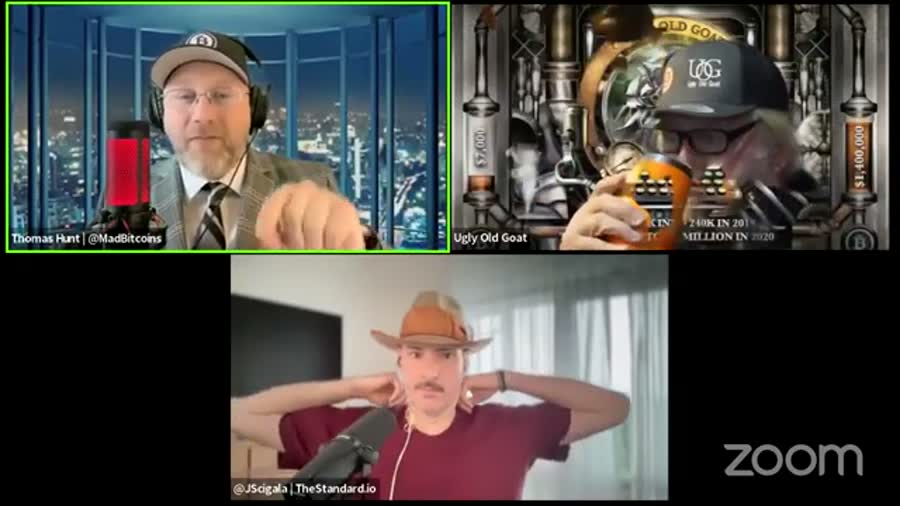
Now — it is three calls, and the last one came in at five hundredths of a percent, which is the kind of win you'd want to buy the man a drink about rather than put on a plaque. But he didn't guess. On that last one, in October 2024, he asked to share his screen, put up a chart, and argued a seasonal bottom set on 3 October with a run toward $70,000 behind it. He was asked for a direction and he gave a thesis. He'd have told you that was the whole point.
He never made the archive's prediction leaderboard, for the entirely unromantic reason that the speaker-matching step never learned his name. His calls sit in the "Unknown" bucket — 1,909 entries out of 3,525, the largest single category in the file. Somewhere in a JSON file, the Ugly Old Goat is still anonymous. He'd have found that funny.
06Blocked by both sides
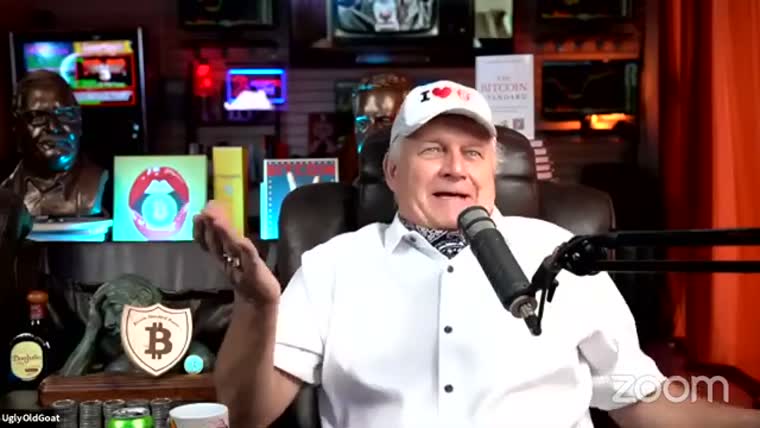
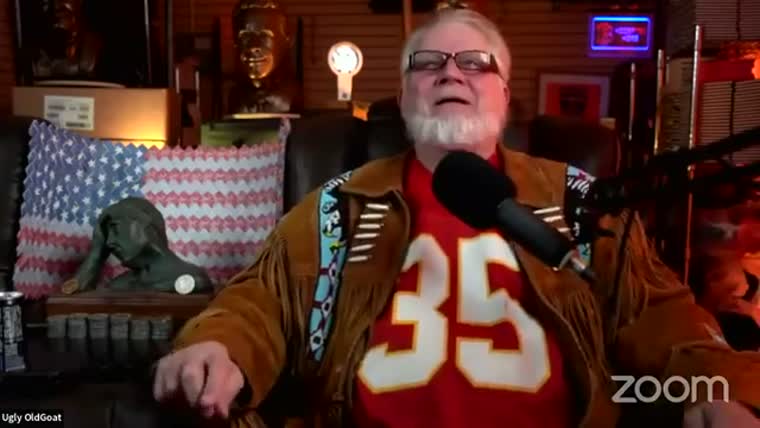
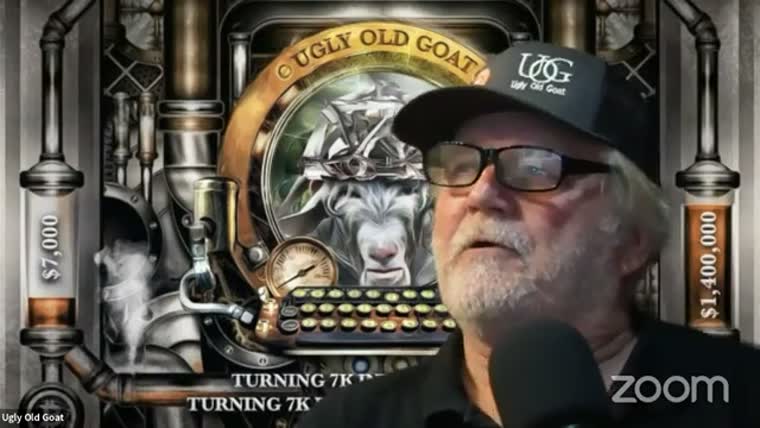
Three years, three panel seats, one man getting older in front of a webcam. By 2024 he had a painted backdrop of his own — a goat, his name, and, down in the corner, a typewriter: the same electric typewriter he had told Thomas Hunt about in 2019 when asked what his first computer was.
The broadcasts stop in October 2024. He didn't.
The last eighteen months of his posting are taken up almost entirely by the Bitcoin Core versus Knots fight over OP_RETURN and spam filtering — and what is striking, reading it now, is that he is not arguing about software. He is arguing about legitimacy, in prose, at length, against everybody.
He called it the Four Pillars of Bitcoin Consensus, drafted something he called the Genesis Act with numbered articles, and asked people to read Articles XV and XVI and repost if they agreed. It was, in its way, entirely consistent: the man who spent 2019 insisting that Bitcoiners should choose their own name spent 2026 insisting that Bitcoin users should be counted in their own consensus. Same argument, bigger stakes.
It did not make him popular. On 10 February 2026, three months before he died, he wrote seven words:
There is no self-pity in it. Read against the rest of him it reads almost like a boast: a seventy-six-year-old man, a long way from the cruise ship, having annoyed every faction in a technical argument he had no professional stake in, still posting. It would make a fair epitaph, and for a while it looked like the one he had written for himself. It turned out not to be.
By January 2026 he had boiled his whole case down to something you could read in ten seconds — "1. Unconfiscatability 2. Censorship Resistant 3. Fixed Supply… Five-year window, Dollar Cost Average, self custody" — and was signing off as "an Ugly Old Goat, Totally Depraved Boomer." The display name on the account still reads Totally Depraved Boomer, OP_RETURN Moron: the insults his opponents threw, collected and worn on the front of the shirt. Which, for a man who spent seven years telling people not to let their opponents name them, is either a total collapse of the thesis or the joke working exactly as intended.
He kept programming conferences in his head to the end. On 16 April 2026, eighteen days before he died, he posted that the next major Bitcoin conference ought to sponsor a debate between Jameson Lopp and Knut Svanholm — Svanholm having been one of his own speakers at Ensenada five years earlier. Still trying to get the right people in a room.
07The week after
He died on a Monday. By the Friday the people he had put on stages were writing about him — and almost none of them mentioned the argument.
The first came from Juan Galt on 8 May, four days after the death and a week before the family said anything publicly. Galt had called him "my mentor" on X as far back as 2021:
Within three hours, four more. By the end of the week there were dozens. What follows is not all of them — a wall of condolences would say less than a handful of the right ones — but it is everyone who had something particular to say.
The people he put on stages
This is the largest group, and the most consistent. He ran two conferences in his life and handed the microphone to people who had never held one.
Zezo Duarte is the man the Goat talked into standing up on the cruise ship in 2019 to explain how he lost his money. Knut Svanholm wrote the longest of all of them, and it corroborates the 2021 conference from the inside — he was paid to be there:
That last detail is new. Satoshi Rockamoto — the Bitcoiner all-star band — began at his conference in Ensenada, when a group of them borrowed a local band's instruments. Svanholm told the story again in the replies that afternoon, to someone who had assumed the Goat was a musician: "Ugly hosted a conference once, and a bunch of bitcoiners borrowed a local band's instruments. That's how the idea for Satoshi Rockamoto was born." Gabe Higgins, also on that 2021 bill, remembered the same night:
Giacomo Zucco put the band first in his own tribute, and in one line named almost everything this page has spent six sections establishing:
Bitcoin Motorist, who gave the Revolution or Evolution talk on the cruise, counted his invitations: "Ugly Old Goat invited me to speak at two of his conferences. I will forever be grateful for his support and friendship 🙏" (9 May, 12:20 UTC). And @neil_petta, on the cruise thank-you list in 2019, put it in a sentence: "We had so many good times together at his events. He was an amazing man." (8 May, 22:16 UTC).
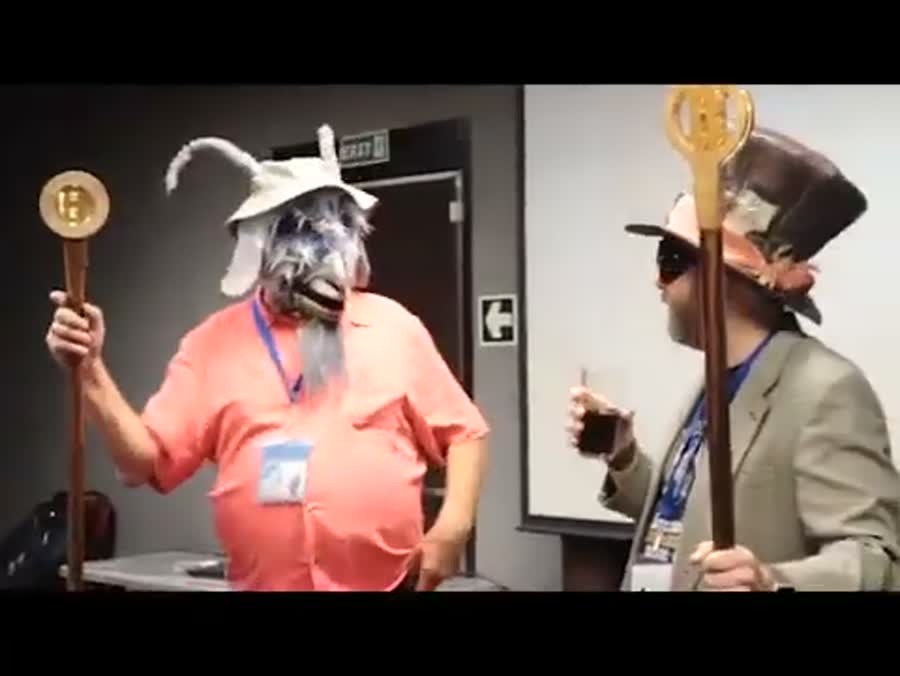
The staff
The day after his own tribute, Bitcoin Motorist posted a photograph of the Bitcoin Standard Bear staff with a caption that independently confirms what section 03 of this page is about — written by someone who had no idea this page existed:
Underneath it, @GhostOfStoneyX2: "I remember that staff, got to hold it for a bit 🤓" (10 May, 04:35 UTC). Seven years after he started handing them out, the staff was the thing people reached for.
The people who read him
He wrote a newsletter and a Medium blog almost nobody outside the community has heard of. Several of the tributes are from people who learned to trade from them.
@cubanjulioneira: "RIP OG, you made a significant difference in many lives, most notably mine 🙏" (9 May, 10:59 UTC). @Etiennez0r, twice, a week apart: "will miss him, using his teaching now" (9 May, 23:07 UTC). And @EJPharmD, who remembered the specific call: "Always loved reading his opinions. One of the most unique in the space. Remember him calling the bottom when Tyler was still around." (9 May, 05:34 UTC).
The people who argued with him
He was, as Tone Vays put it, "a controversial figure in the space." Some of the warmest things written that week came from people who thought he was wrong.
Not all of it was soft. @jumbo_j7 filed the dissent: "He mostly inspired younger traders to gamble insane levels of bitcoin stakes. A very small few absorbed what he had to say about risk management and flourished." (11 May, 05:20 UTC). It is a fair charge against a man who told people to trade, and it belongs here as much as the rest. @lukedewolf, who barely knew him, was closer to the median: "I didn't know him very well, but he started interacting with me in the last few months. He clearly had a unique viewpoint and influenced others positively." (9 May, 11:52 UTC).
The announcement
Tone Vays was the one who made it public, late on the 9th:
The video attached was his own, On The Record w/ Ugly Old Goat — Bitcoin Futures. The claim that it was the Goat's "1st ever interview" sits awkwardly against this archive, which has Thomas Hunt interviewing him on Proof of Work on 6 March 2019. Neither has been dated against the other here; both are recorded, and neither is resolved.
Under that post, Kevin Sciarra wrote the line that closes the thread section 03 opened:
Tyler Jenks had been dead for nearly seven years. Somebody was still counting them as a pair.
And who didn't
Honesty about a week like this means recording the silences too.
Jimmy Song — who taught the $4,000 Programming Bitcoin workshop at the Goat's 2021 conference, and whose posts the Goat was still replying to in mid-April 2026 — published 34 times on X that May, close to daily, and none of it refers to the death. That is the fact, offered as nothing more than that.
And nobody quote-tweeted the family's announcement. Of the nineteen replies to it, most are from strangers; two doubted it was real, and his daughter answered them. A man who spent seven years telling people not to let their opponents name them had, at the end, to have his own death vouched for by a friend before the community would believe it.
His intro on The Bitcoin Group — the chant Hunt would cue him into, and which the transcribers never once got right — was three verbs and a demand: "Hodl hodl hodl, save save save, build build build — sound money, sound money." The formula predates the shows: in November 2018 he was already posting photos under a piece titled, in his own words, "we are the standard — hodl, sayvv, buidl."
Hold on to something. Put something aside. Make something. And be serious about what money is. He got three of those onto a wooden stick and handed it to people he thought were doing the work. It is not the worst way to be remembered.
What's in the archive
Twenty-four episodes across World Crypto Network, Mad Bitcoins and The Bitcoin Group reference him. In ten of them he speaks; in the other fourteen someone else is talking about him. Seven of the ten are WCN between March 2019 and August 2020; three are Bitcoin Group panel seats between 2021 and 2024.
- 2019-03-06
Proof of Work — An interview with Ugly Old Bitcoin Goat13:42
The introduction. Wrong name, electric typewriter, the gold company, Ron Paul, the overdraft.
- 2019-03-26
MadBitcoins' Poolside Interviews: Ugly Old Goat and the YachtChain IFO05:50
Poolside in Las Vegas, straight-faced satire about an Initial Festival Offering secured by "proof of yacht burn."
- 2019-03-30
What was Ugly Old Bitcoin Goat's first computer? (Proof of Work)01:21
A clip from the March interview — the typewriter keys that struck differently "depending upon the strength of your fingers."
- 2019-09-28
Working Man´s Bitcoin Cruise 2019 — #LIVE09:20:38
His conference, nine hours of it, including the Bitcoin Nation speech.
- 2020-01-06
MadBitcoins' Highlights from the Working Man's Bitcoin Cruise55:49
The cut-down. Hodling, saving, building; the GOAT-acronym story; his eldest son on stage talking about forgiveness.
- 2020-07-09
2020 Bitcoin Halving — Part 4 — Jesse Powell, Ugly Old Goat25:48
The goat mask, now "even more detailed than last we met." Not a back-end guy.
- 2020-08-06
Unconfiscatable Bitcoin Conference — Part 10 — Ugly Old Goat joins14:13
Presents the Bitcoin Standard Bear Award — a staff at "point one five Bitcoin," of which "point one will go to the recipient" — and insists he doesn't want to own the tradition.
- 2021-07-23
The Bitcoin Group #268TBG
First panel seat. Institutions, Musk, Dorsey, the reserve-currency heresy. Calls higher.
- 2023-02-17
The Bitcoin Group #346TBG
Claims the December bottom — "I did load my boat up in January" — and calls for the SEC to be abolished. Calls lower.
- 2024-10-05
The Bitcoin Group #425TBG
His last broadcast. Shares a chart, calls the bottom, mentions in passing that he consulted for Craig Wright in 2009. Calls higher.
The fourteen mentions: TBG #197 (2019-03-28), #204 (2019-08-30), #205 (2019-09-06) and #213 (2020-03-06), all Hunt promoting the cruise or a hangout; two Mad Bitcoins episodes (2019-08-24, and the boat video on 2019-09-23, which carries his name only as a tag); and seven WCN episodes where somebody else mentions him in passing — 2019-09-28 (a Today in Bitcoin handing off to the cruise stream), 2020-01-16, 2020-07-16, 2020-07-20, 2020-07-21, 2020-08-18 and 2020-08-25. The fourteenth is the Tyler Jenks interview of 2019-02-13, which is technically a mention and is really the most important episode here.
How this was put together, and what it's missing
Name-matching was the whole job. The pre-built wiki page for him lists 7 episodes. The real figure is 24. That page misses one episode with his name in the title, five WCN episodes where he's named only in the spoken transcript, four named in an episode summary or tags rather than the title, and all seven Bitcoin Group episodes — TBG being a separate corpus it never searched. Searching for the abbreviation "UOG" would have found him zero times in any broadcast corpus; he only ever used it in writing.
Sources. llm-wiki/data.json (1,934 WCN and Mad Bitcoins episodes with
titles, descriptions, tags and summaries); llm-wiki/raw/transcripts/ (2,305 machine
transcripts); the TBG mirror (483 transcripts, predictions.json); Thomas Hunt's
local archive (91,295 tweets, 119,245 likes) for the X material, which returned 222 items
referencing his handle between 9 January 2019 and 9 May 2026; and targeted reads of his live
account for the conference announcements and the final posts. A case-insensitive search for
goat matched 15 WCN/MB episodes on metadata, 39 WCN/MB transcripts and 37 TBG
transcripts; the false positives — "GOAT" as greatest-of-all-time, "goat shit," Bitcoin as a
"fainting goat" — were removed by reading every hit.
Prices. The three rows above use the price_at_prediction and
price_7d_later values already recorded for those episodes in the archive's own
predictions.json. The scoring was done for this piece; the leaderboard doesn't
list him.
The transcripts are rough. They are machine-generated, and they mangle names constantly — Josh Scigala becomes "Jashigala," Hayek becomes "F.A. Hyatt," HODL becomes "hobble." Quotations here are as the transcripts have them. One exception, flagged: in the cruise recording he says the word acronym and the transcriber wrote anachronism, in the middle of the story about discovering that GOAT already meant something. "I didn't do this goat thing on purpose," he said. "It just kind of fell into place. That's the way life works."
The illustration at the top of this page is AI-generated. It is not a photograph, not a
likeness of Conrad Braun, and not his own artwork. It was made for this page with ChatGPT on
24 September 2026, from a brief describing the two things that were his signature — the goat,
and the staff — and it is an allegorical figure rather than a portrait of anyone. The Bitcoin
symbol on the head of the staff was composited on afterwards, by hand. Every
other image is a frame from Thomas Hunt's own video archive on
the 20 TB drive — 2,808 episode files under 2025 WCN ARCHIVE PROJECT, pulled with
ffmpeg and scaled for the web. Each caption gives the episode, the date and the timecode, so any
frame can be checked against the tape. Nothing here is from the San Diego Reader or any other
publication's photography, and nothing shows his home or his family. Two images are of his own
design work — the cruise poster and his website — rather than of him. Where the archive does not
identify people in a frame, the caption says so. Total image payload: 762 KB across
twenty-two files.
Gaps. The 20 TB drive carries the video for almost every appearance, but its WCN transcript corpus runs only February 2014 to November 2018 and so contains none of his words. Two of his filmed appearances have no video on it either: the nine-hour cruise livestream of 28 September 2019, and the boat music video, which was copyright-claimed on the audio and survives only on YouTube — which is why neither is illustrated above. TBG has 483 transcripts for 509 listed episodes, the 26 missing all postdating his last appearance. The X archive is a mirror rather than a timeline — it caught 15 posts directly from his account and 27 more inside Hunt's retweets, out of a far larger output, and its capture of his own account stops at 10 February 2026 — so the quiet stretches are gaps in the capture, not in him. The December 2018 Mahmudov post, the full Tyler Jenks announcement, the 2021 speaker list and everything after February 2026 come from targeted reads of his live account, disclosed here because nothing local corroborates them. The 2021 running order is the exception: he screen-shared it on TBG #268, so it is on the tape. The tributes in section 07 were gathered from X in September 2026; every one is linked to the post it came from, with its author, date and time in UTC, and each was read at source rather than taken from a summary. And the 2020-07-15 halving episode refers to a "Gold Standard Corporation Founder" without naming him; it's very likely the Goat, the transcript doesn't say so, and it isn't counted.
What's deliberately not here. The San Diego Reader feature is a family portrait as much as a conference report, and it contains a great deal about his private life and about other people who did not choose to be written about. Only the parts concerning his own public work have been used. No addresses, no contact details, no home or village locations, nothing about his finances or his family beyond the published byline of that article, and none of the personal matters he disclosed on air that have nothing to do with why anyone remembers him. Two further things were found in the tribute week and deliberately left out: an allegation one person posted in July 2026 about his life long before Bitcoin, which is unverified and has no place on a memorial; and the words his daughter used when she was challenged on whether his death was real, which are public but are hers, not this page's.
- Proof of Work — An interview with Ugly Old Bitcoin Goat · WCN · 2019-03-06 · 13:42 · LO20c3VfDIM
- MadBitcoins' Poolside Interviews: Ugly Old Goat and the YachtChain IFO · WCN · 2019-03-26 · 05:50 · j1vI6KQsXn4
- What was Ugly Old Bitcoin Goat's first computer? · WCN · 2019-03-30 · 01:21 · wK_IZguBU2c
- Mad Bitcoins on a Boat — Working Man's Bitcoin Conference · MB · 2019-09-23 · 02:41 · FJLM7zUqJuc
- Working Man´s Bitcoin Cruise 2019 — #LIVE · WCN · 2019-09-28 · 09:20:38 · mYHOx0c8wkU
- MadBitcoins' Highlights from the Working Man's Bitcoin Cruise · WCN · 2020-01-06 · 55:49 · E60agLZUAb0
- 2020 Bitcoin Halving — Part 4 — Jesse Powell, Ugly Old Goat · WCN · 2020-07-09 · 25:48 · akAKOcYXp4c
- Unconfiscatable Bitcoin Conference — Part 10 — Ugly Old Goat joins · WCN · 2020-08-06 · 14:13 · 9FazKaOVVis
- Proof of Work — An interview with Tyler Jenks · WCN · 2019-02-13 · 34:23 · eE6s20T8H-M
- The Bitcoin Group #268 · TBG · 2021-07-23 · OnySWRuSGJM
- The Bitcoin Group #346 · TBG · 2023-02-17 · YREhVwtMDMw
- The Bitcoin Group #425 · TBG · 2024-10-05 · w2W7lm9DrUo
- The Bitcoin Group #197, #204, #205, #213 · TBG · 2019-03-28 / 2019-08-30 / 2019-09-06 / 2020-03-06 · mentions
- Nine further WCN and Mad Bitcoins episodes · 2019-08-24 – 2020-08-25 · mentions
- "A skeptical Bitcoin wife makes as much as she can at a Baja convention" · San Diego Reader · Shirley Jones · 6 October 2021
- @UglyOldGoat1 on X · 222 archived items, 2019-01-09 – 2026-05-09 · plus live reads for conference posts
- Death announcement posted by his daughter · @UglyOldGoat1 · 15 May 2026 · status 2055094096142971001
- @JuanSGalt · 8 May 2026, 19:35 UTC · earliest tribute found
- @btc_cards · 8 May 2026, 21:34 UTC
- @bitcoinliferaft · 8 May 2026, 21:51 UTC · and the trading card, 9 May 00:40
- @_BitcoinCapital · 8 May 2026, 21:58 UTC · and the essays, 10 May 01:41
- @AnalysisFeral · 8 May 2026, 21:59 UTC
- @knutsvanholm · 9 May 2026, 08:21 UTC · Satoshi Rockamoto origin
- @giacomozucco · 9 May 2026, 09:26 UTC
- @BitcoinMotorist · 9 May 2026, 12:20 UTC · and the staff, 10 May 04:45
- @DuarteZezo · 9 May 2026, 13:30 UTC
- @j_snk07 · 9 May 2026, 19:22 UTC
- @ToneVays · 9 May 2026, 22:34 UTC · the public announcement
- @KevinSciarra · 10 May 2026, 01:36 UTC
- @GabeBHiggins · 10 May 2026, 18:12 UTC