Satan Smoking Weed
Satan Smoking Weed
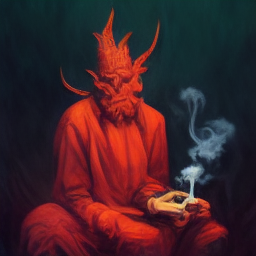
 satan smoking weed in the…Forty-three images of Satan smoking weed. The cycle is exactly what it sounds like and stranger than it sounds. Across the run Thomas runs the same figure through Monet, Soviet propaganda, and a card-game tableau. He puts the cigarette in three different artists' hands. The cycle is the archive's purest exercise in what happens to a transgressive subject when you put it inside a respectful visual tradition.
 Satan smoking weed
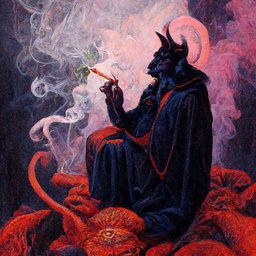
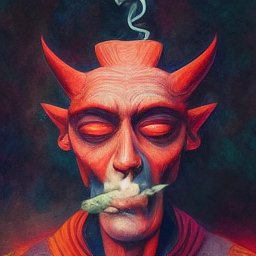
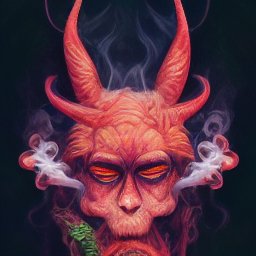
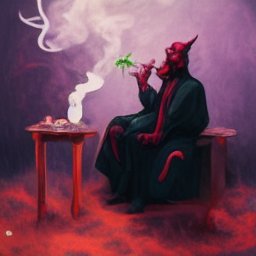
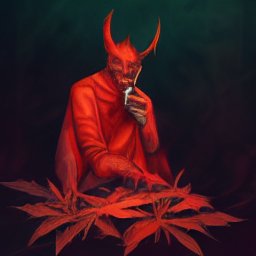
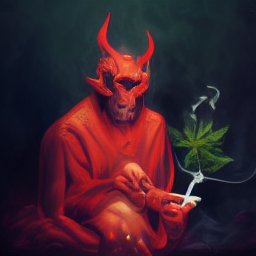
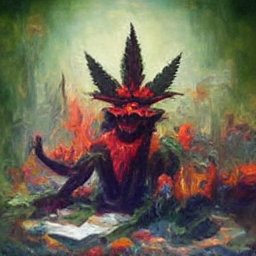
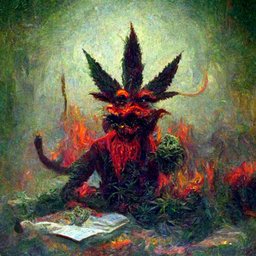
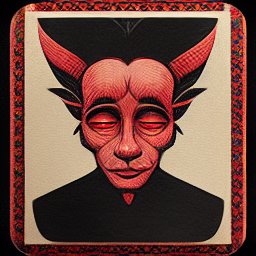
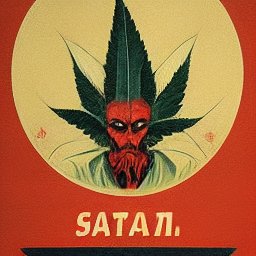
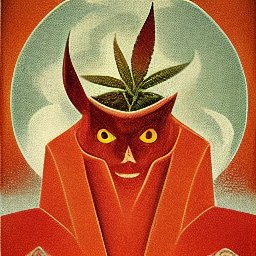
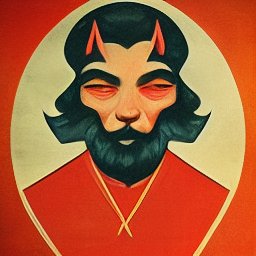
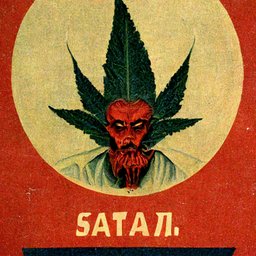
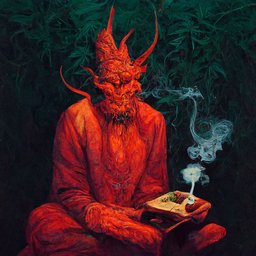
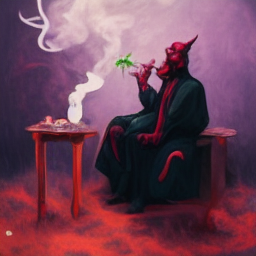
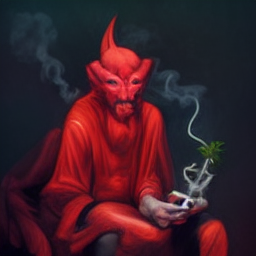 Satan smoking weedThe base prompt — satan smoking weed (eighteen runs) — gives the model the default red-skinned horned figure, joint in hand, in a kind of generic illustrated style. These are the cycle's weakest images. MidJourney has a strong prior for satan and a strong prior for weed, and combining the two without a third constraint produces what you would expect: a stoner devil, faintly comic, lacking authority. The image is a sticker.
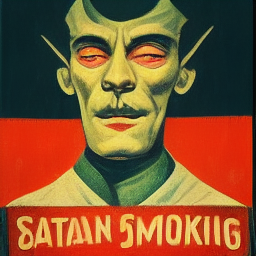 satan smoking weed soviet…
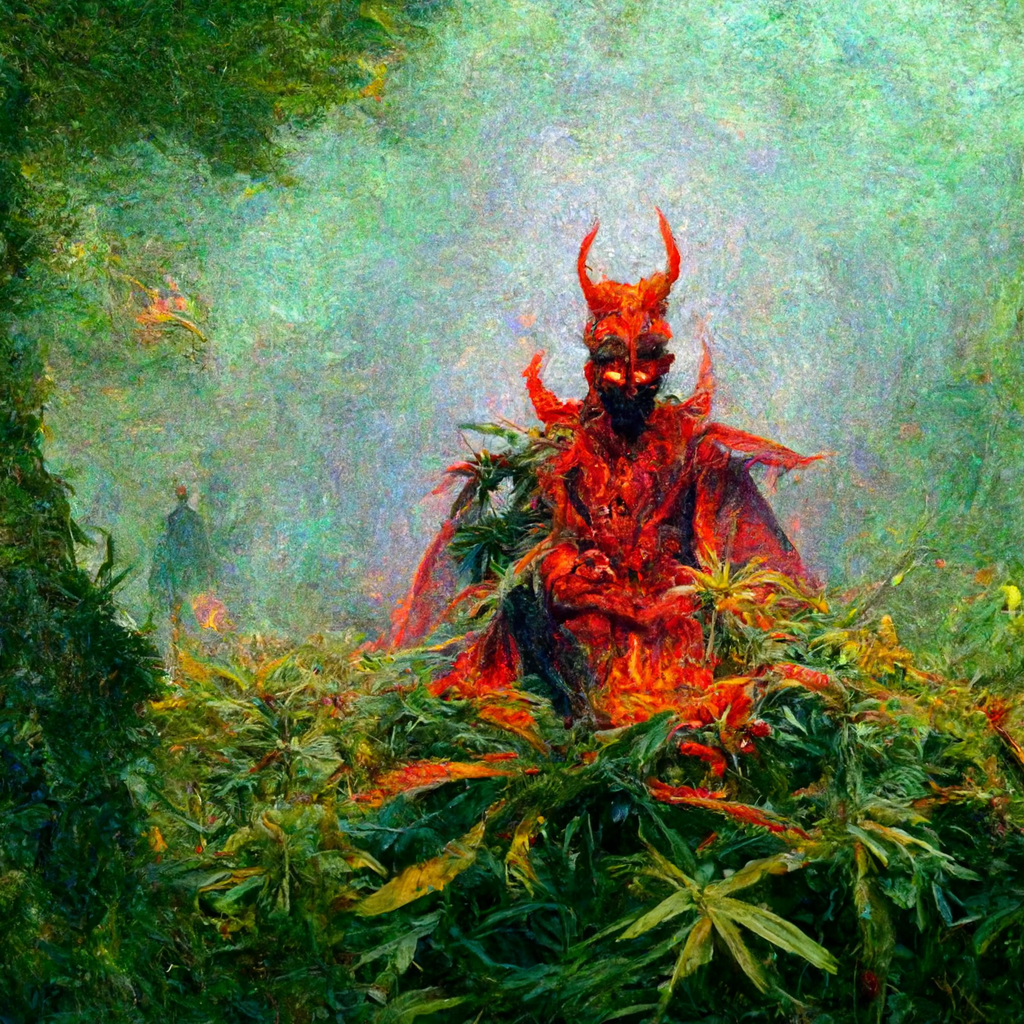
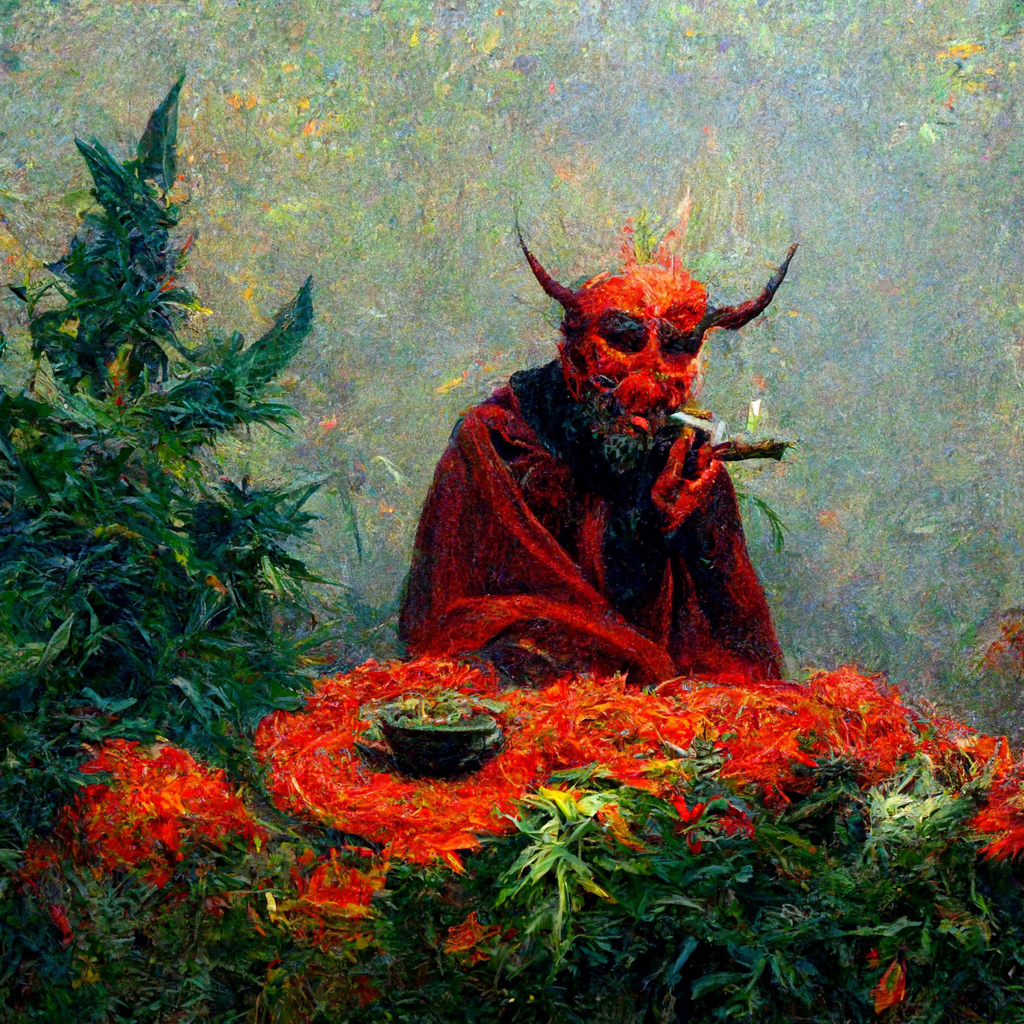 satan smoking weed in the style of monet
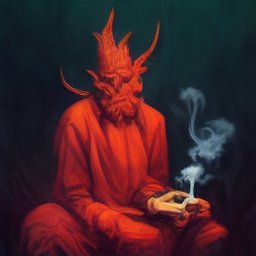
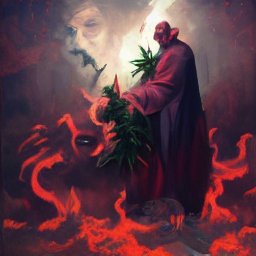
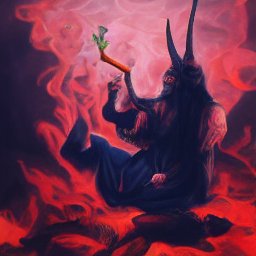
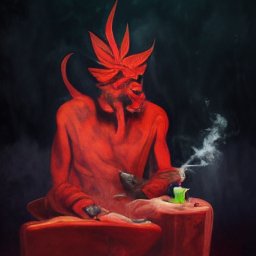
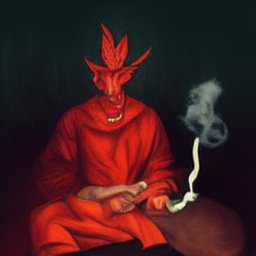
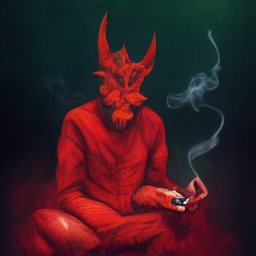
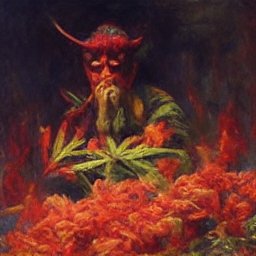
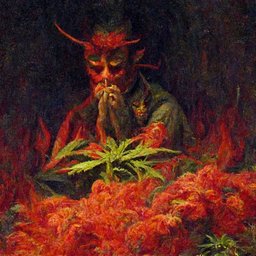
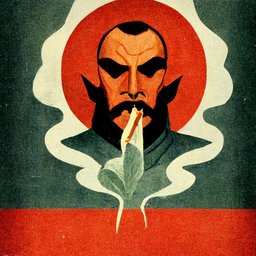
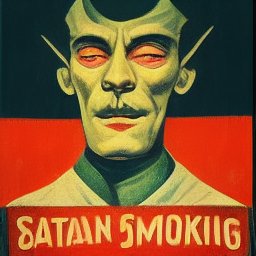
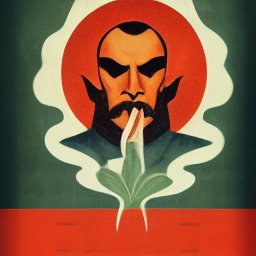
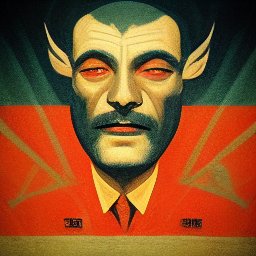
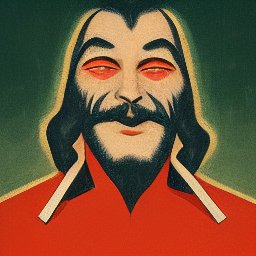
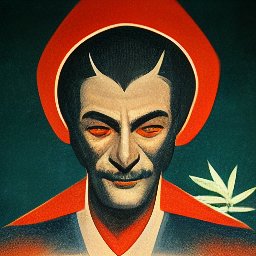
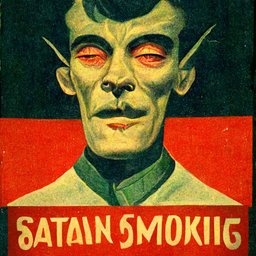
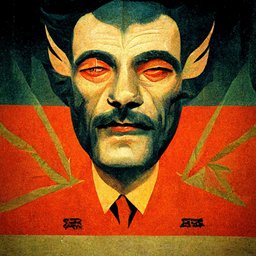
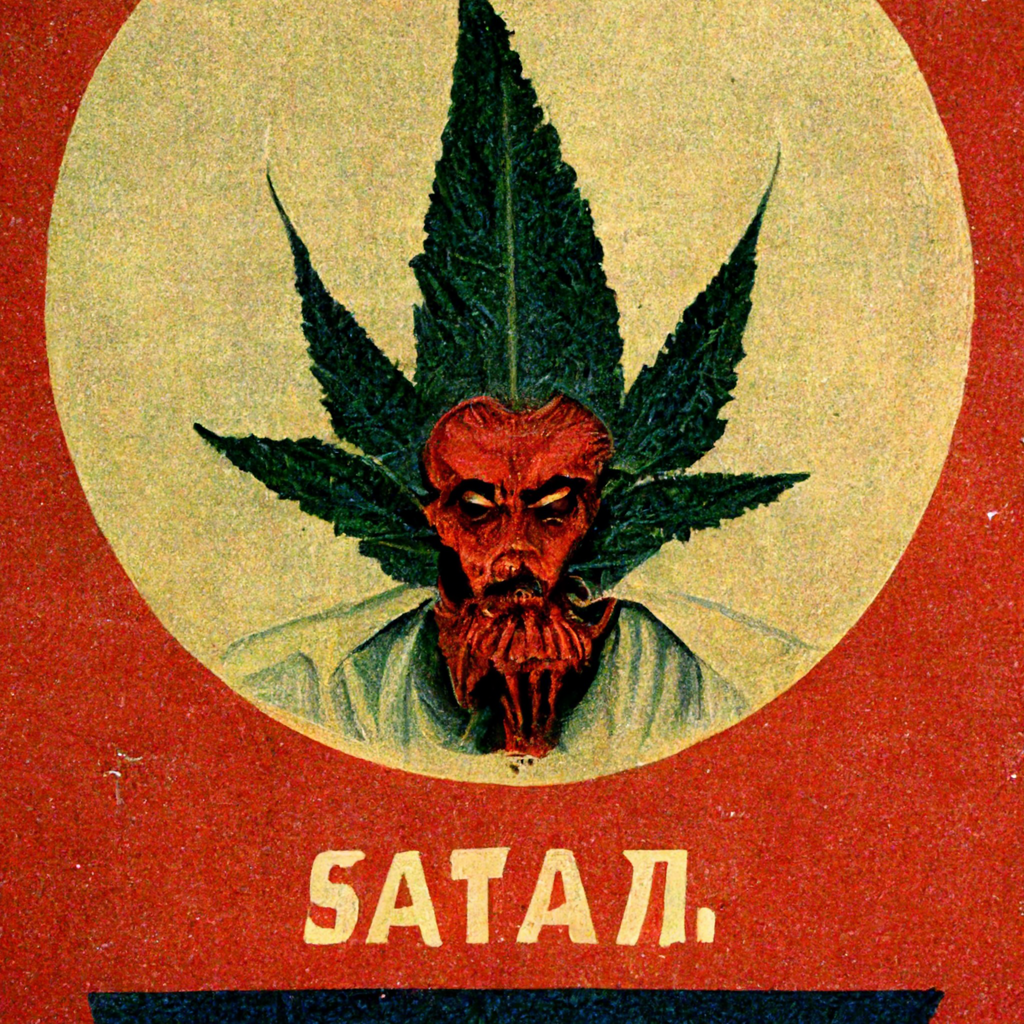
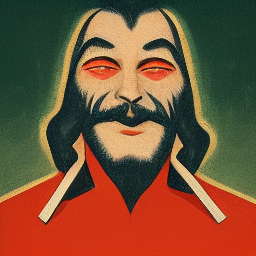
The cycle becomes interesting when Thomas adds the third constraint. Satan smoking weed soviet propaganda (twelve runs) is the breakthrough. The figure tightens. The composition becomes axial. Satan is in three-quarter pose, jaw set, joint held like a cigarette in a Stakhanovite portrait. The red of his skin is the same red as the Soviet flag, and the model recognizes the color match — the figure begins to look like a poster from 1932. The transgression of the original prompt is replaced by a different transgression: Satan rendered as a worker-hero. This is funnier and more pointed than the base image. Thomas has gotten an irreligious-secular ideology to give an iconic religious villain its highest visual honor.
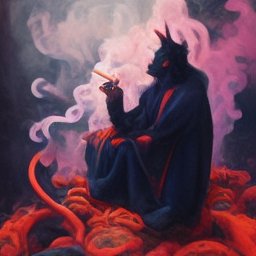
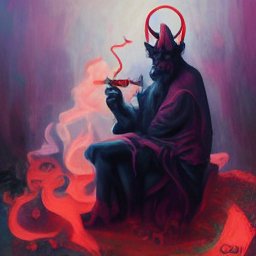
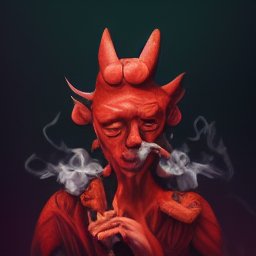
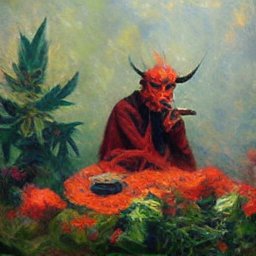
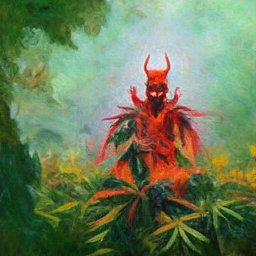
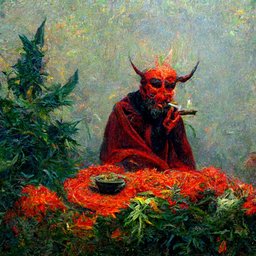
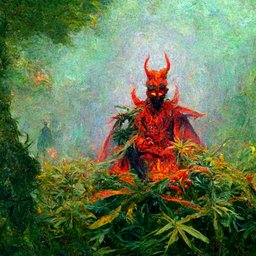
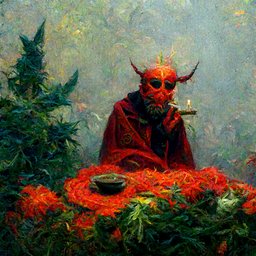
Satan smoking weed in the style of monet (nine iterations) is the cycle's most painterly run. Monet's late style — the loose brush, the dissolved edges, the focus on light over form — does extraordinary things to a horned figure. The devil softens. The horns become a suggestion in lavender. The cigarette is a small bright point in a haze of pond-color. 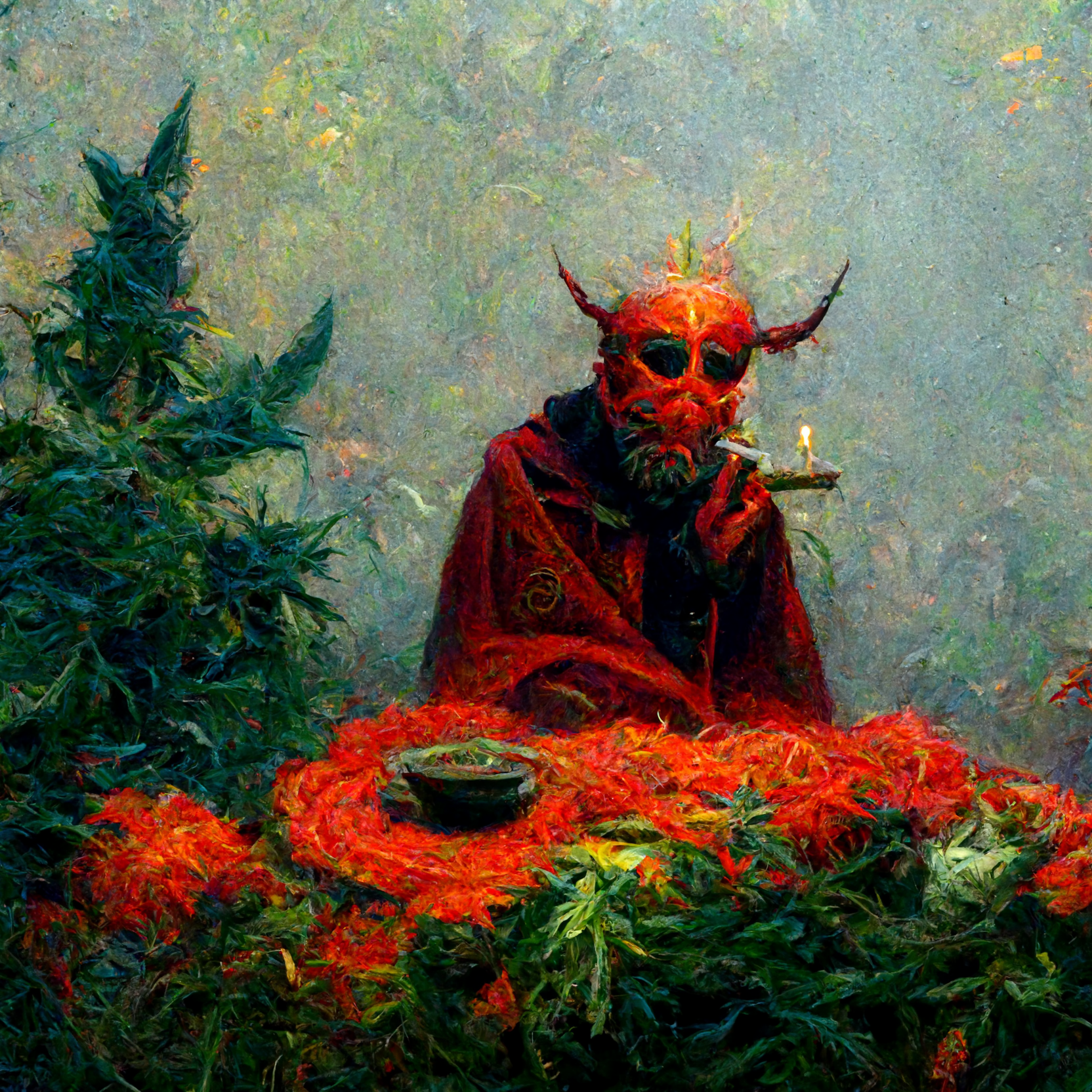 satan smoking weed in the styl…The resulting images are the cycle's most beautiful and the most defensible-as-art. They could hang next to Water Lilies. They are also still pictures of Satan smoking weed, which is the entire point.
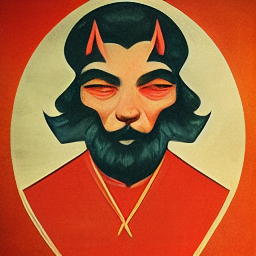 satan smoking weed soviet…The cycle's argument is structural and important. Style transfer is a moral act. Putting an irreverent subject into a reverent style does not produce parody; it produces iconography. The Soviet Satan is more credible as a figure of power than the base Satan because the style we have laid over the subject signals power. Thomas is demonstrating this principle by running it on a subject the audience has agreed in advance to dismiss. He has chosen the lowest-stakes possible content so that the mechanism of style-as-meaning becomes visible.
 Satan smoking weed
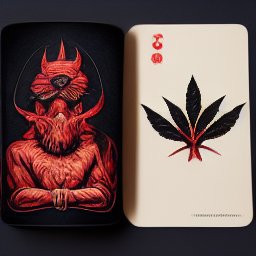
 satan smoking weed playing cards
This is a more philosophically sophisticated cycle than its title suggests. It is doing what the Mickey, Inverted cycle is doing in reverse — Mickey takes a sanctioned figure and reveals menace through restyling; Satan takes a condemned figure and reveals dignity through restyling. The two cycles are bookends in a single argument: style is the variable; the figure is what we have collectively agreed it is, but agreement can be revised.
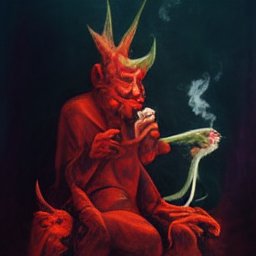
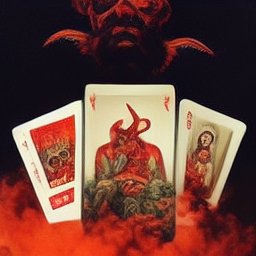
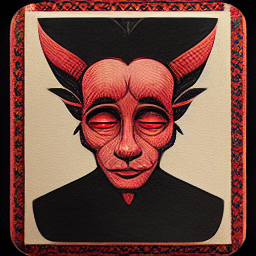
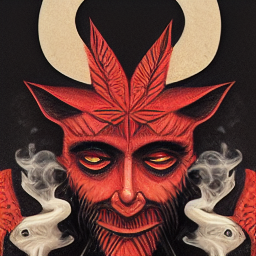 satan smoking weed playing…Satan smoking weed playing cards (four iterations) is the cycle's gentlest entry. Satan at a table. Cards in hand. Joint in mouth. The image refuses to commit to any of its three constituent transgressions and produces, instead, a kind of fraternal warmth. Satan unwinding. The image admits that even the figure of evil deserves an evening off. It is a small and unexpected mercy.
 satan smoking weed soviet…
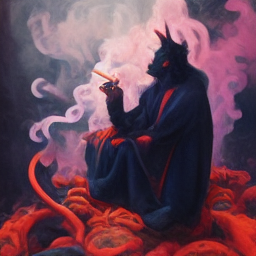 Satan smoking weedThe cycle's place in the archive is as the artist's test bench for style transfer. Once you have read the Satan Smoking Weed cycle you can read every other style-transferred cycle in the archive — the renaissance Bond, the Soviet propaganda Hatter, the cubist building — as variations of the same experiment. Subject is constant; style is variable; meaning is produced by the combination.
 satan smoking weed soviet propaganda
Whether the cycle's choice of test subject offends you is its first question. Whether the experiment itself is meaningful is its second. Both questions deserve their full weight.
The complete set
All 43 images in this collection
Every image, no curation — a contact sheet of the entire run. Click any thumbnail to open it.